
Facts & Risks
Educate Your Family on Dangers of Marijuana Use
Marijuana use comes with real risks that can impact a person’s health and life.
Whether marijuana is smoked, vaped, or eaten, there are adverse effects associated with use in any form.
Studies have found marijuana is an addictive, harmful, and mind altering drug. It over-activates parts of the brain and negatively affects brain development. Marijuana leads to physical health problems, mental health problems, and risk of addiction.
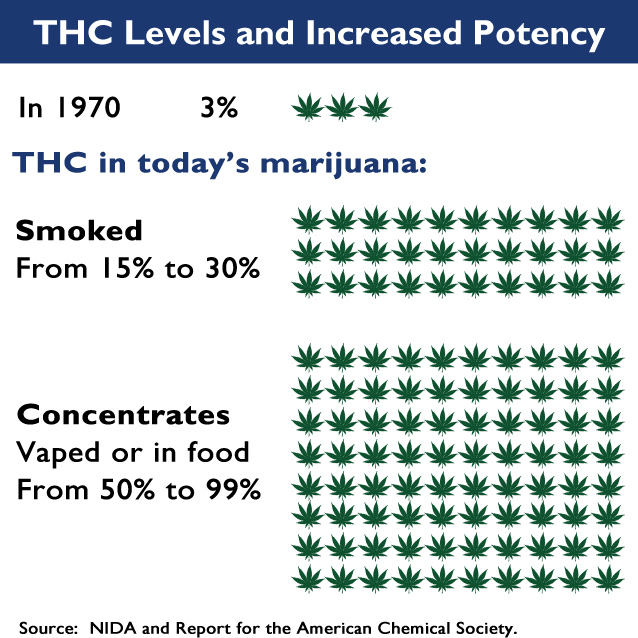
With the legalization of medical and recreational marijuana throughout the United States, marijuana potency has increased exponentially. Concentrates are not the traditional joint of the past. Concentrates are highly potent, THC-rich forms of marijuana that can be vaped, dabbed, and used in edibles.
Exposure to high levels of THC, the chemical in marijuana that causes impairment, increases the risks of physical dependence and addiction. Higher doses of THC are more likely to produce anxiety, agitation, paranoia, and psychosis.
Arizona Parents: Do you need tips on how to talk to your child about the new recreational marijuana laws? Download these talking tips today.

Surgeon General Advisory
– VADM Jerome Adams, the first Surgeon General Advisory on marijuana since 1982
%
Almost 30% of teens have used marijuana - this is TOO many!
Latest Studies
Concurrent and Sustained Cumulative Effects of Adolescent Marijuana Use on Subclinical Psychotic Symptoms | American Journal of Psychiatry | August 2017
Results: For each year adolescents engaged in regular marijuana use, their expected level of subsequent subclinical psychotic symptoms rose by 21% (p <.05) and their expected odds of experiencing subsequent paranoia or hallucinations rose by 133% (p < .001) and 92% (p < .05), respectively. The effect of prior regular marijuana use on subsequent subclinical psychotic symptoms persisted even when adolescents stopped using marijuana for a year. Findings remained significant after controlling for all time-stable and several time-varying confounds, as well as possible reverse causation.
Effects of persistent cannabis use on depression, psychosis, and suicidality following cannabis-induced psychosis: A longitudinal study | American Journal on Addictions | September 2025
Estimating cannabis-attributable traffic fatalities: A response to Jin et al. | International Journal of Drug Policy | 2025
A recent article published in the International Journal of Drug Policy takes a deeper look at this issue by moving beyond relative risk and estimating how many deaths may actually be attributable to THC-positive driving .
Cannabinoid Hyperemesis Syndrome, 2016 to 2022 | JAMA Network Open | November 2025
Conclusions And Relevance In this cross-sectional study of US ED visits, CHS prevalence increased sharply during the COVID-19 pandemic and remained elevated. The findings highlight the need for continued vigilance and refinements to the clinical recognition of CHS.
Cigarette and cannabis use and co-use among U.S. adults: An examination of prevalence and trends during 2015–2023 | Science Direct | January 2026
Conclusion: Cannabis-only use and co-use trends pose public health risks akin to cigarettes, necessitating targeted prevention campaigns. A multi-pronged strategy of public health education, early detection, and effective treatment development is vital to prevent cannabis from becoming the next public health crisis.
Latest NEWS Commentary
The Link Between Cannabis Use and Traffic Deaths | IASIC | 2026
As cannabis use becomes more common across the United States, an important public safety question continues to surface: how much does cannabis actually contribute to fatal traffic crashes? A recent article published in the International Journal of Drug Policy takes a deeper look at this issue by moving beyond relative risk and estimating how many deaths may actually be attributable to THC-positive driving.
Read more
Smart Approaches to Marijuana: Lessons Learned from State Marijuana Legalization | SAM | 2026
Read more
Teens who use weed before age 15 have more trouble later, a study finds | NPR | 10/29/2025
Teens who start using cannabis before age 15 are more likely to use the drug often later in their lives. They are also more likely to develop mental and physical health problems in young adulthood compared to their peers who did not use the drug in adolescence.
Read more
Nearly half of drivers killed in crashes had THC in their blood | Science Daily | 10/6/2025
Over 40% of fatal crash victims had THC levels far above legal limits, showing cannabis use before driving remains widespread. The rate didn’t drop after legalization, suggesting policy changes haven’t altered risky habits. Experts warn that the lack of public awareness around marijuana’s dangers behind the wheel is putting lives at risk.